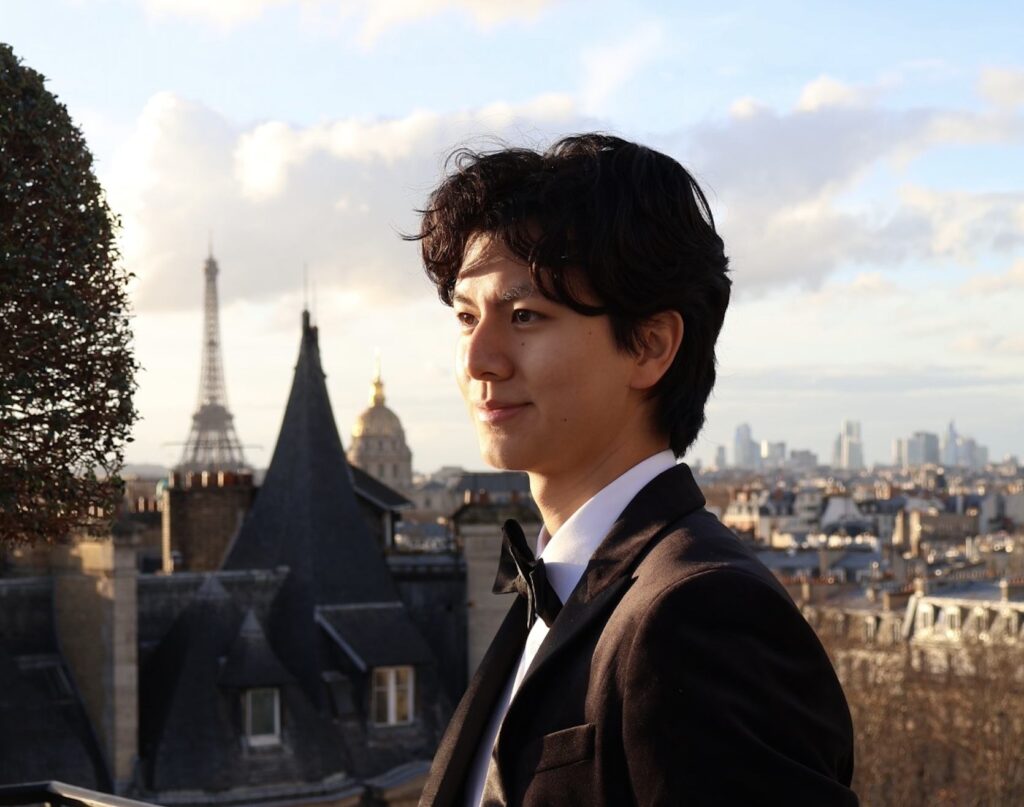
International Public Speaking Competition alumnus and Hong Kong native Christian Suen tells us about the unexpected benefits of taking part
How did you get involved with the ESU’s Public Speaking Competition?
I started doing public speaking in my first or second year of secondary school. In my 4th year, I joined the Hong Kong team and later took part in a competition with the Hong Kong Federation Youth Group, where the winner gets to represent Hong Kong in the ESU’s IPSC in London. That same year, I also did the 21st Century Cup competition in China, which I also won, and so I was given the option of whether I wanted to represent China or Hong Kong. I chose Hong Kong and came to London in 2019 but unfortunately didn’t make it into the grand finals.
What stood out about the competition for you?
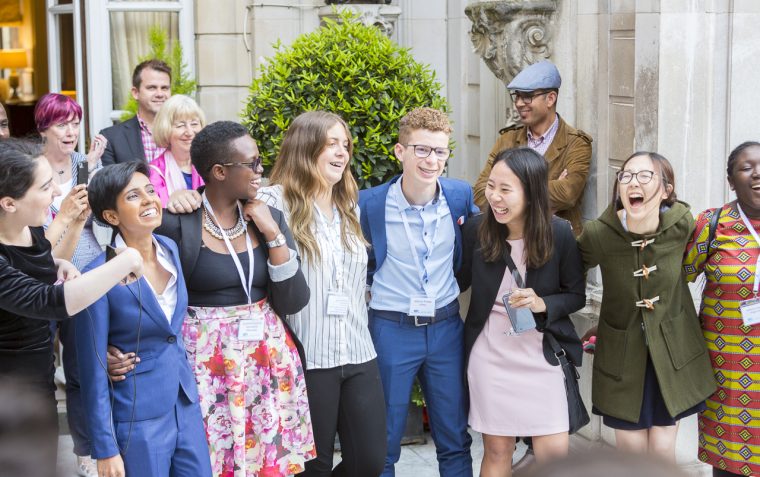
The whole thing was very cool. I remember we had to give our speeches in a very grand, historic building [the ESU’s Dartmouth House] and we went on lots of activities too. The mentors – who, as university students, seemed so mature to us back then, though I now realise they were only a couple of years older than us – were really good, too. I definitely learned a lot from them. Another key thing was getting to know people from so many different countries. Not many people can say that they have a friend from Estonia or from Mauritius. Everyone had such interesting backgrounds in terms of culture, obviously, but also in terms of where they were in life and what they wanted to do after school. We still follow each other on Instagram and are in touch on WhatsApp, and I’ve even met up with a couple of participants in their home countries, which has been great.
More than all of these things though was how the competition helped me to accept myself. I had a very Christian upbringing. I was already out as bisexual from a really young age but, even though my parents are quite accepting for Asian parents, growing up in Hong Kong there’s a lot of stigma around how public should you be with your sexuality? Will it affect your getting into universities? Will it be detrimental in terms of finding a job? So that was always lingering in the back of my mind. Being at IPSC was one of those moments where meeting people from other countries and places which are a lot more accepting and also the skillset that I learned kind of came together in a way that helped me better accept my identity and be willing to share that with other people. That’s why I started to bring more LGBT activism into my social media content and my public speaking as well. [Christian recently gave a TedX speech in Hong Kong and spoke on panels there around World AIDS DAY.]
What did you get out of it in terms of skills?
Hong Kong places a great deal of importance on extra-curricular activities, but to me, public speaking is more of a life skill than an extra-curricular. You’re really just learning how to better communicate and deliver your ideas, though it certainly helps with research skills and analytical thinking too. As I’ve progressed in my career (a degree at Cambridge followed by posts at McKinsey and now at Mandarin Oriental), you realise that basically 70 per cent of your success is how people perceive you. And so often in business meetings, there could be a really fantastic person in the room who is giving really great ideas, but they’re saying them in a really mumbled, soft, quiet way. Unfortunately, the reality is a lot of times managers don’t really hear or appreciate that. If you are able to confidently project – even when you’re not actively ‘public speaking’ – that’s hugely beneficial, no matter what line of work you’re in.
The IPSC was also really good for helping me to learn networking skills, if that’s the right word. Life is full of situations where you are thrown together with others, whom you don’t know, for a similar purpose. Working out how to break the ice, how to socialise and get to know people has been a skill that I learned at the IPSC and which has been hugely beneficial to me in adult life.
Can you give us any practical examples of how your skills have helped you?
I know that my public speaking skills were really important in me getting into Cambridge University. After your interview, you can ask for the tutors’ notes and what you were scored on. I was nosy, so I asked for them. I’d been asked a question around the significance of the bourgeoisie the during Nazi occupation and the notes said that factually, I got it completely wrong. But they also said that I’d said it with such conviction and that the reasoning I used made sense – it was a logical and persuasive argument. So that was potentially part of what got me into Cambridge and that has really stuck with me.