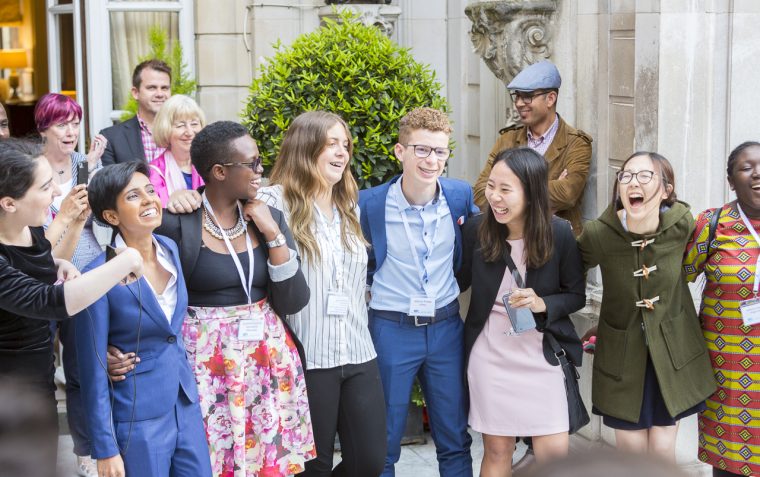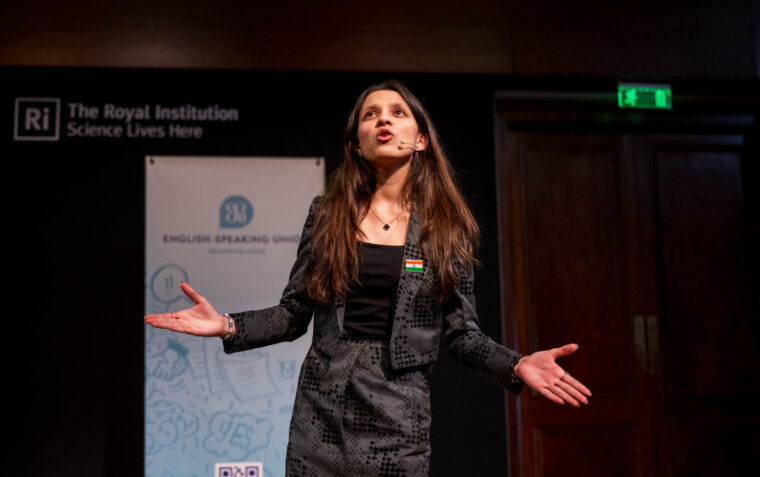
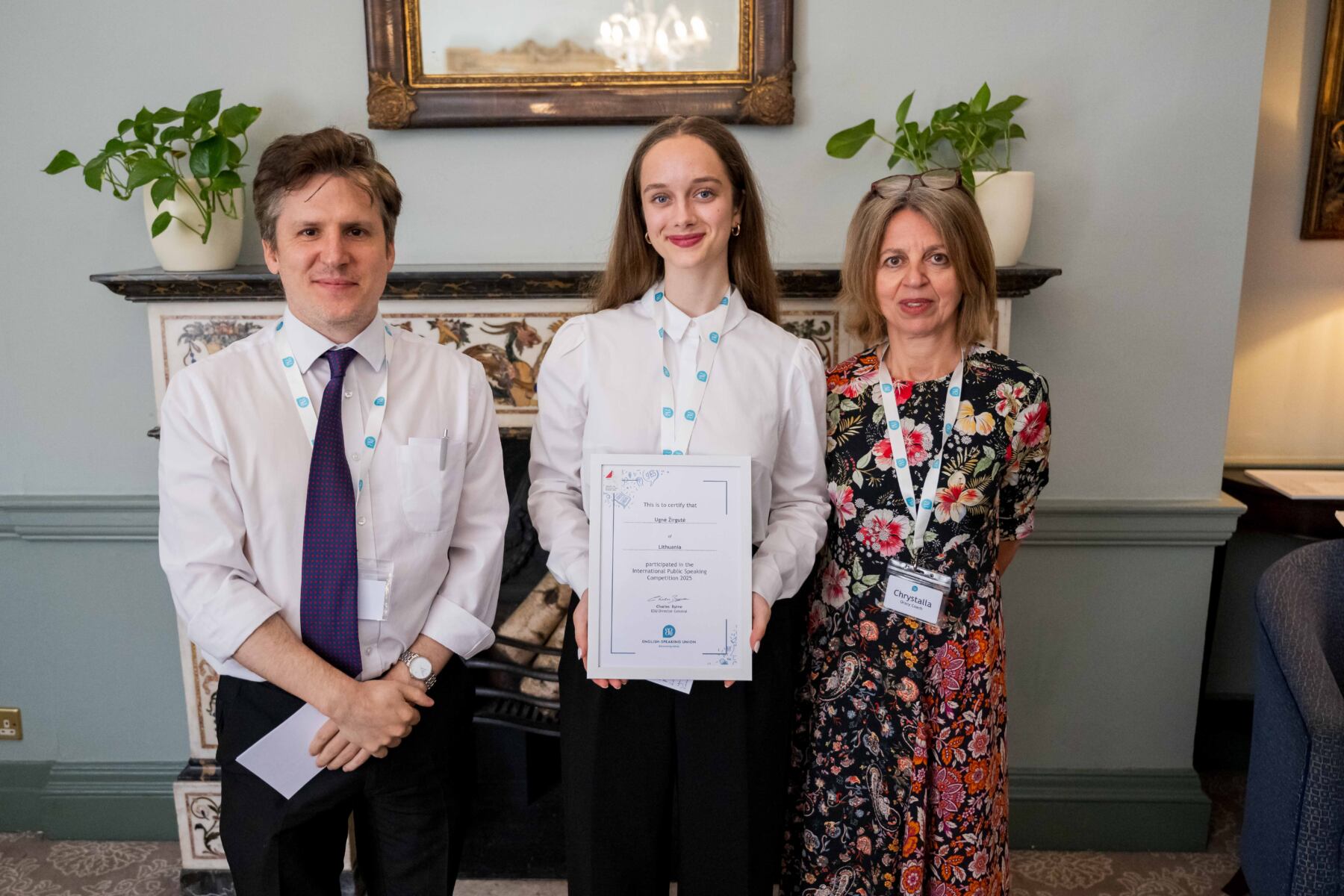
ESU alumna Ugne Žirgute tells us how one week at the ESU International Public Speaking Competition (IPSC) in London turned competitors from 40 different countries into lifelong friends
Pure happiness. That’s how I would describe the IPSC week in London. As clichéd as it may sound, those few days changed me: academically, personally and emotionally.
Preparing for the competition was already an unforgettable experience. The format was unlike anything I had encountered before. Instead of strict guidelines, we were given a broad theme and full freedom to interpret it. That freedom allowed me to speak about something I truly care about. After hours of researching, writing, and rewriting, I shared my passion with the world.
For me, that passion is nanotechnology. I was able to talk about interdisciplinary collaboration and how chemists, physicists and biologists work together to bring inventions like quantum dots to our doorstep. No larger than a handful of atoms, these tiny crystals glow in pure colours and act as the hidden magic behind vibrant QLED televisions and advanced medical tools that detect cancer.
Equally powerful was sitting in the audience and hearing everyone else speak. Watching each contestant bring their own unique take to the same theme was deeply inspiring. Some perspectives challenged my own. Others made me laugh or moved me entirely. We dissected ideas, asked questions, and kept learning from each other long after stepping off stage.
The week also gave me a new sense of pride in my culture. I’ve always been proud to be Lithuanian, but I arrived in London armed with a defensive script, ready to explain where and even what Lithuania is. I never had to use it. The first conversation I had was with a girl from Georgia, who stopped me and said, ‘Yes, I know Lithuania. My favourite author is Lithuanian’. That moment (and many more like it) made me realise people all over the world know and respect my home.
If I had to choose the best thing I brought home from London, it wouldn’t be a medal or a new speaking technique. It would be the connections. Put a bunch of public speakers from 40 different countries into a single building and you are not going to get a lot of silence. We talked constantly. From midnight conversations about Mexican politics to friendly debates about national dishes, every moment was filled with connection and curiosity. I now have friends from every corner of the world, with whom I can either start a business or gossip about boys. We also interacted with alumni, judges, professionals, and younger kids just starting their oracy journey. No topic felt too big or too small.
Just when I thought I knew everything about my peers, I kept discovering more. After the competition ended, I learned that someone I met as a speaker is also a talented musician, poet or a fashion icon. There was always one more talent to discover.
We explored London, too. One unforgettable moment was our visit to the National Gallery. With our guide, we focused entirely on one painting, Rubens’ Samson and Delilah. We spent hours analysing its details. Imagine a group of teenagers following one man through a museum, bombarding him with questions about brushstrokes and symbolism. He couldn’t get rid of us, and we couldn’t get enough.
Fast forward to today, and the connections are still alive. Our group chat is buzzing with plans to reunite. Some of us have even become pen pals, sending letters across continents.
One week may not seem like much. But when it’s filled with passion, discovery and people who care, it’s enough to change everything. I left London more confident in my voice, more connected to the world, and more proud of where I come from.
I’m endlessly grateful to the English-Speaking Union for making this experience possible and creating a space where voices from around the world can meet, grow and inspire one another.