
Oracy experts Lyn Dawes and Neil Mercer share their suggestions for promoting oracy in ways which really make a difference
1. Organise whole-class discussions
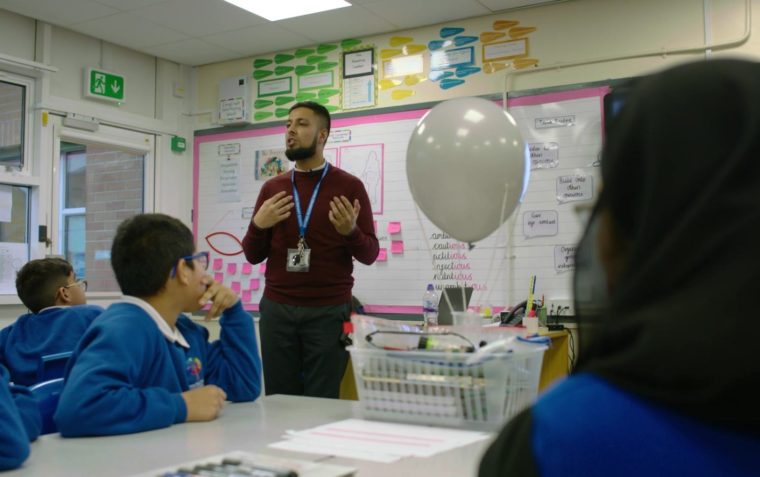
It’s useful to balance times when you are explaining, describing or instructing with times when you actively involve your students in whole-class discussions. Whole-class talk can encourage your students to think aloud, to hear a range of points of view and to identify any misunderstandings. Finding out what students think can help your planning of future lessons. And an interesting discussion about a curriculum topic can motivate individuals and foster curiosity.
How to do it:
– Ask some open questions to stimulate deeper thinking
– Encourage students to listen and respond directly to one other; and to ask you and each other questions about what they hear
– Involve every student in the discussion
– Encourage students to give positive feedback on each other’s contributions. (‘It helped when Sam said…’; ‘I thought Roma’s description was good.’)
2. Develop oracy skills for group work
Students sometimes find it difficult to work in groups; but that is not surprising if they have never been taught how. By teaching them how to listen attentively; ask questions for understanding; disagree respectfully; support their ideas with reasons; and try to negotiate agreement, you can transform the quality of group work and help students of any age benefit from collaborative learning.
How to do it:
– Begin by discussing with students their own experience of working together: What goes wrong? What helps make things go well?
– Next, explain the importance of discussion as a way of sharing thinking, questioning ideas, articulating thoughts that might otherwise never be aired – and finding the best solutions to problems. Emphasise that we should come to discussion as equals, ready to listen and share ideas, support our view with reasons and respectfully offer different views
– Give students (or – even better – ask them to work together to agree on) some ‘Ground Rules for Talk’ whenever they are working in groups, based on their improved understanding of how to collaborate. For example:
In group discussions we will:
Ask everyone in the group what they think
Listen to one another attentively
Share all our ideas
Ask for and give reasons
Agree and disagree with respect
Work towards an agreed outcome
This approach to group work can be applied in any curriculum area and with students of all ages. Once in use, it’s useful to ask students to review and share feedback on the quality of their talk. How do they feel about discussion now? Has it helped their learning? Are they more able to listen, question others, and express their points of view?
Enabling students to collaborate is one of the most important things that you can do. By learning to think and reason aloud together, your students can learn better ways of thinking and reasoning when working alone. You are helping them to sharpen up their thinking while also developing their essential social skills for life beyond school.
3. Develop confident speakers
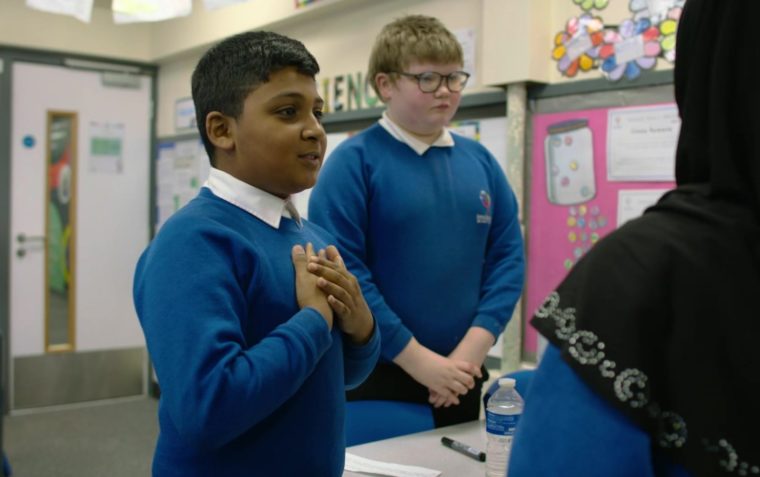
Most people find public speaking daunting. But when students are taught speaking skills and given opportunities to practice using them, their confidence really grows. Every young person needs to learn presentation skills.
How to do it:
– Identify relevant presentation skills such as voice projection, choice of content, liveliness and flair, from the Oracy Skills Framework (see the links to this and other guidance below) to help you guide their learning
– Then set up situations in which students are asked to give short explanations or accounts of a topic of their choice in a safe setting, such as first in a pair, then in a small group
– Students can next move on to speaking to a larger group, to a whole class and then giving a presentation to a wider audience
– Their fears can be overcome through learning presentation skills together. A crucial part of students finding their voice is that you (and their peers) give sensitive, positive and constructive feedback at every stage
4. Develop oracy with your colleagues
A shared approach to oracy in a school helps ensure continuity and progress. It’s useful to think of oracy having three aspects:
Learning how to talk
This involves learning how to communicate well; learning to speak confidently in public, and to work collaboratively with other people; to become a good listener as well as a good speaker.
Learning about talk
Spoken language skills need to be underpinned by an understanding of how spoken language works. For example, how it differs from written communication, and how some ways of talking (such as accents and dialects) can be linked to attitudes and prejudices.
Learning through talk
An important way that students learn and understand the curriculum is by listening to their teachers and talking with them and their classmates. Teachers’ presentation skills are important here, as is their management of talk in the classroom in the ways we have described in this article.
How to do it:
– Plan together for oracy. Enlist your colleagues, in your year group or across the school. Share the concept of oracy, with its three aspects
– Think of a key oracy focus which is important for your school, for the coming term, such as: attentive listening; working in a group: presenting to the class
– To persuade senior managers, point out that it is not a choice between promoting oracy or promoting subject attainment: promoting oracy will promote attainment!
– Discuss how to integrate oracy into lessons. What will direct teaching of the skills look like? When will it happen? How will you look for progression in skills development?
– Talk about oracy with other staff, TAs, parents, and importantly the students, so that everyone is fully involved
– Make sure that oracy is embedded in your curriculum planning
– Use oracy prompts in your classroom displays:
Talking is thinking together!
What do you think? why?
I agree because…I disagree because…
Can you say a bit more?
Let’s talk it over!
At the end of term, review with your colleagues how things have gone. Ask students to share ideas and examples and say what difference they think oracy has made to learning and their ability to communicate. Ask teachers to identify any barriers to teaching oracy they have encountered and see if they can be minimised.
Links
Oracy Cambridge (blogs, resources, research)
oracycambridge.org
The Oracy Skills Framework
oracycambridge.org/wp-content/uploads/2020/06/The-Oracy-Skills-Framework-and-Glossary.pdf
Voice 21 (resources, publications)
voice21.org
Books
Oracy: the Transformative Power of Finding Your Voice, by Neil Mercer (Bodley Head/Penguin)
Let’s Talk, by Lyn Dawes (for 9 -13 year olds. Hachette, October 2026)
Oracy: 100 ideas for Primary Teachers, by Topsy Page (Bloomsbury)
Oracy: 100 ideas for Secondary Teachers, by Alan Howe and Topsy Page (Bloomsbury)
Transform Teaching and Learning Through Talk: The Oracy Imperative, by Amy Gaunt and Alice Stott (Rowman & Littlefield)
Lyn Dawes and Neil Mercer are members of Oracy Cambridge: the Hughes Hall Centre for Effective Communication at the University of Cambridge. Neil is also Chair of the Ouse Valley branch of the ESU.