
Peter Nyvold Bojsen-Møller, from Denmark, tells us about his experience of the International Public Speaking Competition
Peter Nyvold Bojsen-Møller, 19, represented Denmark in the International Public Speaking Competition 2025 – the culmination of a journey fuelled by self-driven determination.
Peter, from Gentofte, a suburb north of Copenhagen, first discovered his passion for public speaking when a teacher encouraged him to join the school debate club, ‘I had no idea what I was doing, but I gave it a try, and that was the beginning of everything.’
Despite having no prior public speaking experience, Peter was encouraged by his teachers to sign up for Denmark’s national Public Speaking Competition in 2024. He made it to the national finals, placing in the top five.
‘I’m a bit of a sore loser, so I knew I had to come back and try again. When the next year’s topic was released, I started preparing. Preparing for a speech might be very intense for some people, but for me, it’s very on-and-off. I would start by looking into the theme and doing some research. I’d bike to school and think about what I was going to say, then forget about it for two months.
‘When the national competition was about to arrive, I’d prepare once again. But even then, it wasn’t really stressful, it just felt like a small but nice part of my life for a very long time.’
Unlike many participants, Peter did not receive coaching specifically for public speaking or the international competition. ‘I wrote and prepared the speech entirely on my own. I didn’t even practise it in front of my parents; the first time anyone heard it was at the national competition, and then again at the international stage,’ he says.
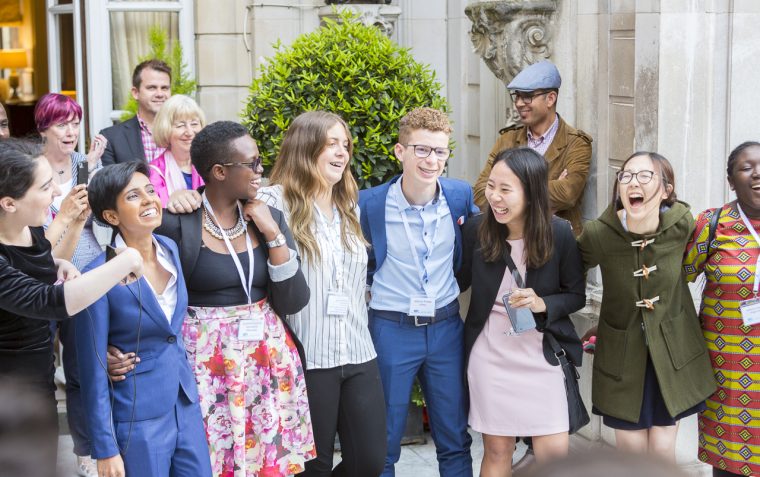
For Peter, one of the most memorable aspects of the IPSC week was the diversity of perspectives among participants. ‘We were all given the same quote [to base the speech on], but every single speech I heard (and I heard at least a double-digit number) was different. We all performed at a high level – obviously, since we’d made it that far – but still, every single person brought something personal. Whether that was based on their interests or their cultures, there was nothing that overlapped,’ he adds. ‘I think that was the most eye-opening part of it – what really made the IPSC special, something you can’t just get at home – was the fact that you’re bringing together people from about 40 countries and letting them share their perspectives.’
Beyond the competition, Peter has formed lasting friendships that continue today through an active international WhatsApp group. ‘When I travelled to Lithuania with some friends, I messaged our IPSC group chat and one of the participants, Ugn?, ended up showing me around her city. That really captures what the week was like. Even though it’s only about six days, you become really close.’
He describes the ongoing connection: ‘Lots of people text in the group chat every day – it’s a really great community. I’ve already warned them I’ll be travelling a lot later this year, so they’re not getting rid of me just yet!’
Peter is clear on why competitions like the IPSC matter, especially for young people today. ‘Competitions like the IPSC are so important because they bring together people from completely different environments so that they can interact with each other – that’s the point where you get the largest creation of community and common connections. Engaging with people in a different, more healthy way, which you do through the IPSC, you also become more aware of your own biases. There is a plethora of good reasons for having international competitions, but to sum it up: discussion and debate are essential for our society and for our democracy as a whole. Teaching young people that is probably one of the most valuable things we can do.’
‘It’s very easy, especially as a young person, to think: my voice doesn’t matter,’ he continues. ‘But I think what you learn from public speaking is the ability to present your stance in a comprehensive manner – to elaborate on what you think is wrong with the world, and what steps people should take to fix it. Being able to speak up and say – whether it’s to the people around you or to politicians – “this is an issue, here’s how you should solve it, I’ve experienced it” – is quite possibly the best way for young people to catalyse change.’