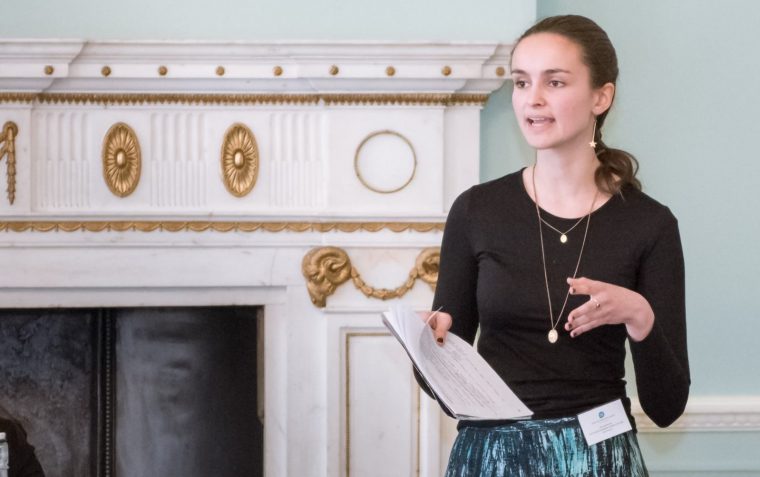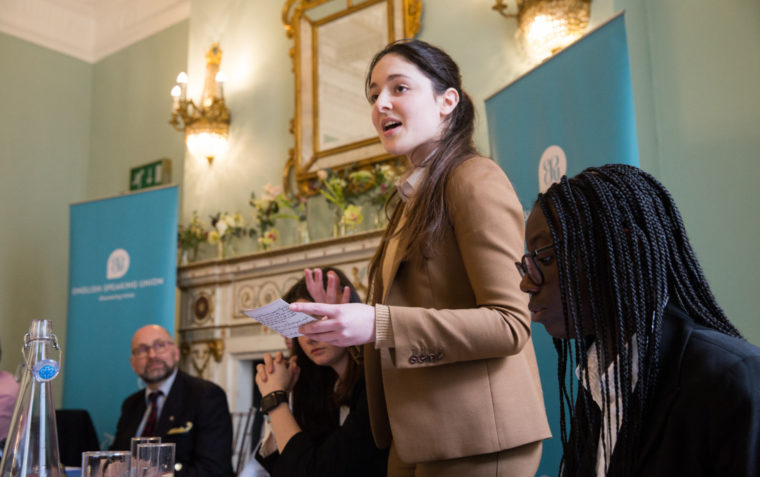
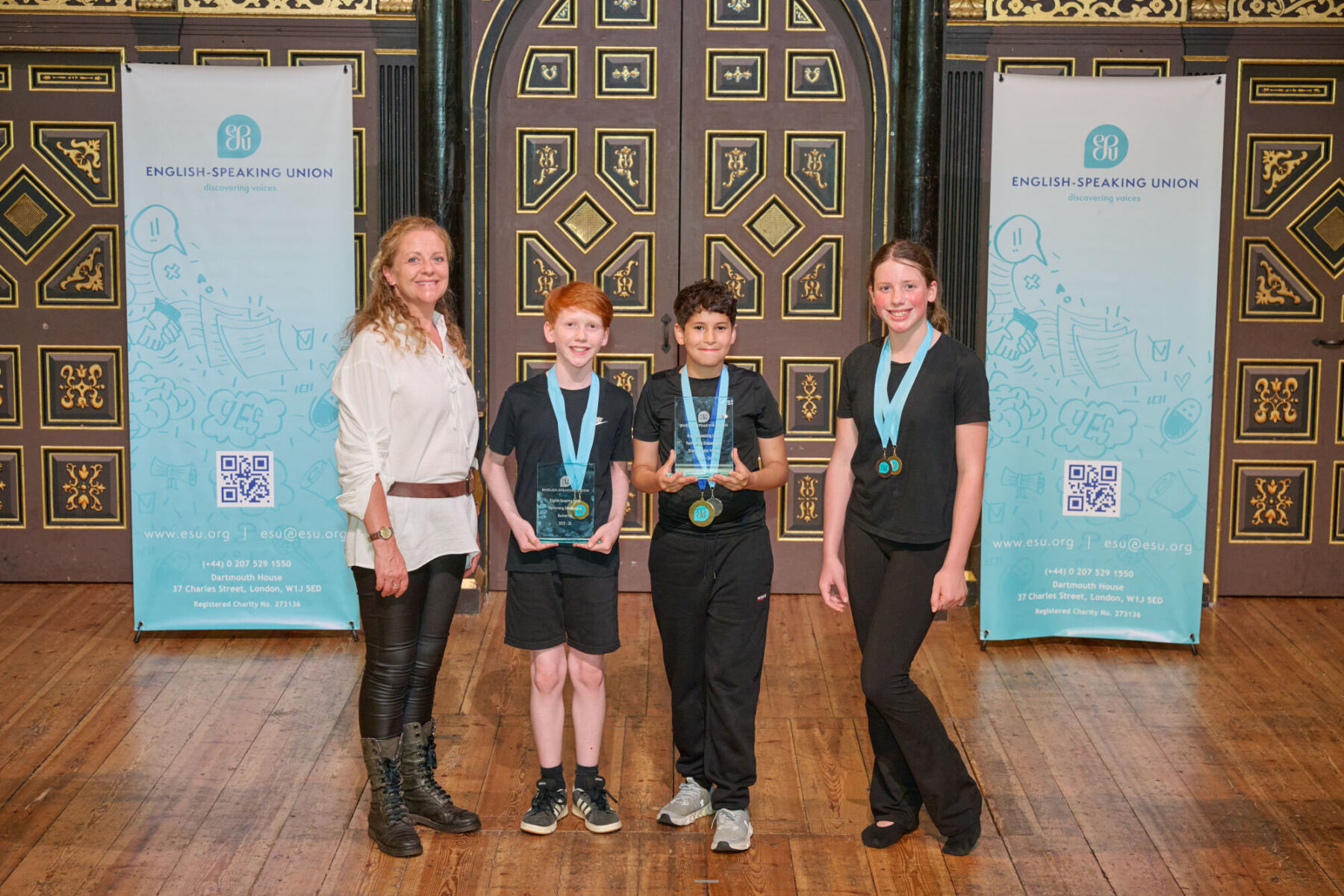
Adam Hadj Rabia from Madani Boys School, Leicester is the winner of the English-Speaking Union’s Performing Shakespeare Competition 2026, for his powerful rendition of Shylock’s famous speech from Act III, scene i of The Merchant of Venice. The grand final took place at the Sam Wanamaker Playhouse, Shakespeare’s Globe, London, on Thursday, 25 June, the culmination of a contest that has involved over 150 schools and nearly 4,000 students across England and Wales.
The audience was treated to a series of outstanding performances, with students delivering monologues and duologues from Shakespeare’s plays, showcasing their dramatic talents and oracy skills. The competition not only celebrates the timeless works of Shakespeare but also fosters confidence, creativity and communication skills among the young participants.
The runner-up was Rufus Birge from Sir William Borlase’s Grammar School, for his performance of Mark Anthony from Julius Caesar, Act III, scene ii. The Don Miller Audience Choice Award went to Emmeline Abbott, a Year 7 student from Windermere School, for her inventive performance as the three witches in Act IV, scene i of Shakespeare’s Macbeth.
The judging panel included Lucy Cuthbertson, Director of Education (Learning) at Shakespeare’s Globe; esteemed voice coach Carol Fairlamb; actor Colm Gormley and Paul Roseby OBE, CEO and Artistic Director of the National Youth Theatre.
Chair of judges Lucy Cuthbertson said, ‘The standard of performance was really incredible. The young people here today showed such skill and stagecraft in terms of both using the space and how they used their vocal skills to really make us understand and connect us with the text. What we saw today was really top class.’
Speaking on the judges’ decision to award Adam first place, she said, ‘The standards are very high, but this was a unanimous decision. We were really moved from the beginning by the connection that this young person had with the themes of the play, and how it speaks to them, to the world, and how they managed to get that authenticity into their performance.’
Explaining why he chose his piece, Adam said ‘The questions that Shylock asks, about identity, dignity and equality are all questions we still struggle with today. We still see groups being pushed aside, prejudices being carried out and stereotypes being cycled through and justified. So, as I perform this speech I would like you to hear two voices at once: Shylock’s – wounded, proud, furious but human – and Shakespeare’s voice, asking us to look at ourselves, our society and the way we treat people we call “other”.’
Paul Roseby added, ‘Communication skills, which is really what this competition is all about – making their story relatable to an audience, to an employer, to anybody – are essential. No matter what a young person is studying or what they want to do, if they can’t communicate what they want to do, they’re never going to do it. Without oracy, we have no future ambition, we have no future jobs. It’s the skill we all want.’
The ESU Performing Shakespeare Competition encourages students aged 11 to 14 to explore and appreciate Shakespeare’s language, fostering a love for literature and performance. Each participant introduces their piece with a short speech, thereby enhancing their public speaking and critical thinking skills and enriching their overall performance.