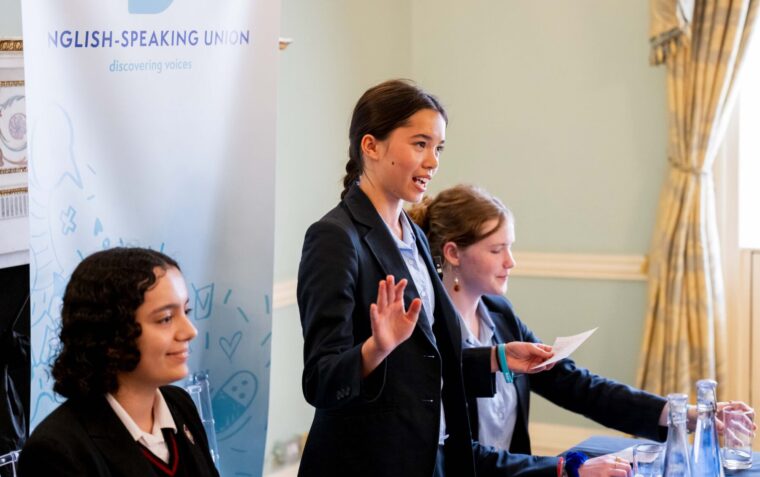


Our competition judges share their winning strategies ahead of the Public Speaking Competition grand final
Hook your audience from the start
Begin with a powerful opening that grabs attention immediately, then bring it full circle at the end with a simple linking sentence that echoes your hook. Your audience will feel the satisfying connection and remember your speech long after it’s over.
Make it personal
What sets the best speakers apart are the personal touches, such as a fresh perspective or an idea that feels distinctly yours. Don’t be afraid to let your personality shine through! It’s what makes a speech memorable as well as impressive.
Make your evidence work hard
Data is only as strong as the context you give it. Don’t simply drop in a statistic or case study and move on. Explain why it’s relevant, why it matters and, crucially, how it supports the point you’re making. Evidence without analysis is just information; it’s your job to make it an argument.
Shift your tone for the Q&A
After delivering a formal speech, practice transitioning into a more conversational tone when you move into questions. This natural shift helps the audience stay engaged and makes the Q&A feel like a genuine exchange rather than an extension of the performance, allowing you to really connect with the questioner.
Ask questions with the audience in mind
Your role as a questioner is to be the voice of the room. Anticipate what the audience will be wondering and phrase your questions simply and clearly so everyone can follow. Avoid anything that feels vague or generic, a well-crafted question shows you’ve listened carefully and keeps the conversation purposeful.
Know your role, and own it
The PSC is a team competition, and every role matters. No matter how strong the speaker is, if the chair and questioner aren’t working in harmony, the team can’t reach its full potential. One way to make sure you’re all in sync is to have a go at every role when practicing. This helps you get to grips with your presentation a whole, rather than just as an individual.
Use courtesy genuinely
Thanking a teammate or opponent for their point of view does more than sound polite, it builds camaraderie, which is what this competition is all about. Make it genuine and it will elevate the atmosphere of the whole room.
Command the room with eye contact
Looking up from your notes and making eye contact invites your audience to tune in and stay focussed. It signals confidence and draws people into your world rather than leaving them as passive observers.
Match your expression to your words
Under pressure, it’s natural to lose track of what your face is saying! But it is vital that you make sure your facial expression matches the tone of your speech. A light-hearted moment deserves a smile; a serious point calls for a more neutral expression. When your face and your words are in sync, your message lands with far greater impact.
Build your summarising skills
A great exercise to sharpen one of the most underrated public speaking skills, summarising, is to listen to something on the radio for a couple of minutes, then have a go at explaining the key points in your own words. Practise this regularly and you’ll find it much easier to distil complex ideas clearly and concisely when it matters most.
Want to find out more about our competitions? Click here for more information.