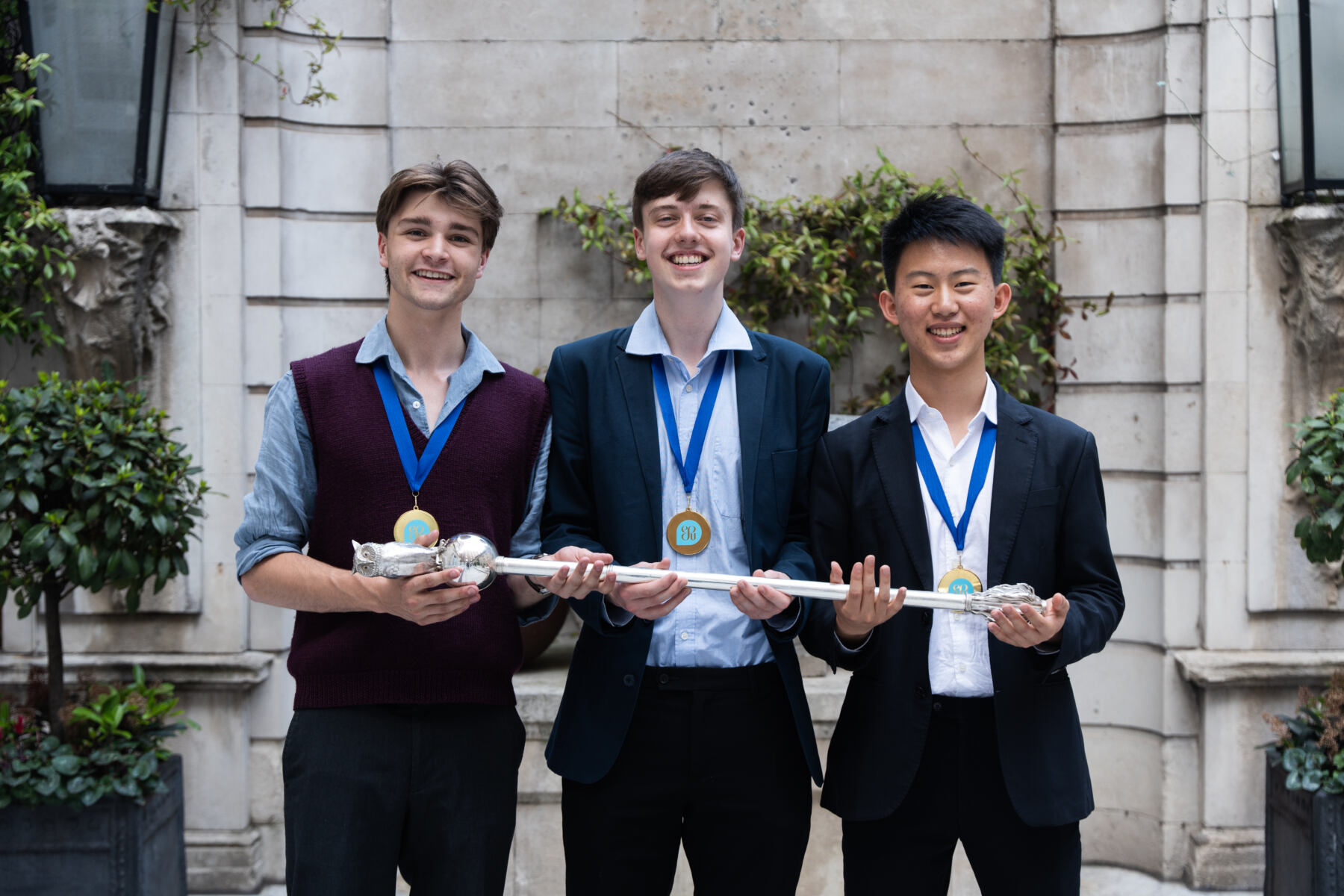
Tim Schmalz, Head of History and debating lead at Radley College, twice winners of the ESU Schools’ Mace debating competition, tells us the secrets of his teams’ success, and why debating is such a useful skill to have
Don’t assume which students will be good at debating
Radley is an all-boys public school and there are a lot of connotations that come with schools like that. Yes, some boys can be very assertive and many are naturally confident walking into a room, but that’s not really what good debating is all about – especially in the ESU competitions. At the ESU, unlike some of the other competitions we’ve tried, it’s much more about what you say than how loudly you say it. It’s also interesting to note that of the five boys who have debated in and won the ESU Schools’ Mace in the past two years, four of those were on funded places, so they don’t come from the backgrounds that you traditionally associate with schools like Radley. One was debating in his second language and another was doing it in his third language, which says a lot about those boys and how they’ve overcome the challenges that they’ve had in their lives.
Build skills in the classroom
All of the debaters here at Radley have been historians whom I’ve had the privilege of teaching either at GCSC or A-level. Debating, for me, starts in the classroom with the written word. If students can find their voice and articulate their thoughts privately and get positive feedback on that, they know they’re thinking in the right way.
We might do several lessons on a subject where it’s just me talking and them taking notes and then we might pause for an entire lesson and I’ll say, “OK, you know about as much about this topic as I do, now let’s see what you actually think about it.” And everyone has to say something. It’s an even playing field, because the loud kids who are quite certain they want to get their voice across might not have read the arguments as closely as someone who’s a little bit quieter and thinks more deeply. When they then make a good point and everyone realises, they have more confidence to voice their opinions next time.
In time, I also get them to do a presentation in class as well, starting off with maybe two minutes, but then going up to around 10 minutes towards the end of the year.
Imagine you’re pitching your ideas to a really clever 12 year old
So often, when students are debating for the first time, they tend to go for really flashy language and cite a lot of statistics. That can be useful, but time is better spent thinking how to distil your argument and communicate it not only to your team, but to the opposition, and to everyone else in the room.
Own the room
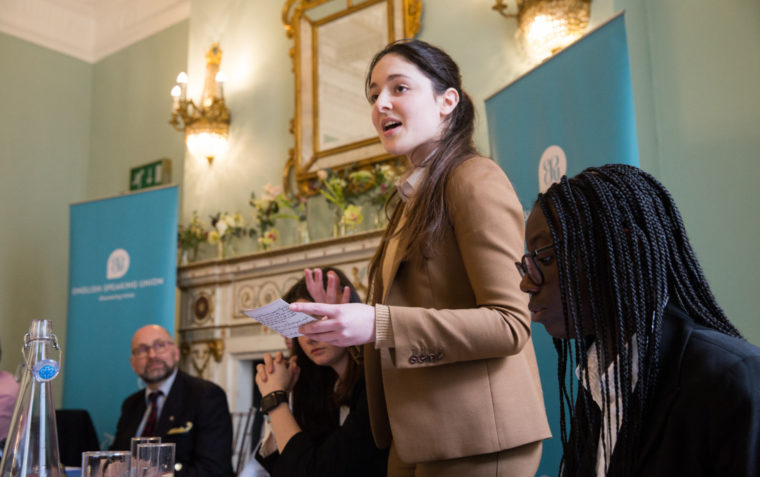
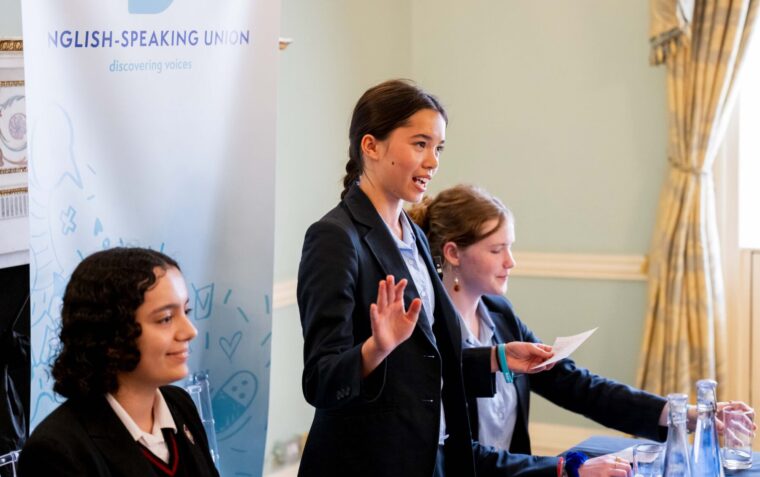
Our debaters always come out from behind the table and stand in the centre of the room. It’s a really powerful gesture, even if they’re terrified to do it, because it shows that they’re trying to overcome any apprehension that they might feel, and it’s about owning a space. From there, they’re better able to make eye contact with the audience, with the opposing team and to refer back to their own team – all potent communication tools.
Use flashcards
I allow students to use notes, but they cannot read verbatim, unless they’re starting out of course. I always try to remember that speaking in front of strangers is really scary – I know I struggle with it – and so reading a speech can be a natural first step. After that, I prefer that they have flashcards rather than an iPad which immediately creates a divide between you and your audience, or sheets of paper which rustle and flap.
Listen
The only way you can really resolve differences is by understanding where the other person is coming from. Debating is precisely that. It’s not going in with the script and just regurgitating what you’ve written. It’s about listening to each other and finding the points of agreement. Where are we totally aligned? But then also thinking about how to show that our side’s points are perhaps more powerful or more decisive in thinking about certain issues than the other’s.
Don’t over rehearse your students
I’ve made a deliberate decision not to be too interventionist in how I coach my students. In most cases, I don’t hear their arguments until they’re actually spoken on the competition floor. And that’s because I need to empower them as individuals and as a team to do it themselves. They have to talk amongst themselves, to plan themselves, and to fail themselves. They will be unsuccessful, as we were in our early days, and that’s part of the process of learning. If you force them to think for themselves, they’ll be better equipped to respond to an unexpected question or unconsidered argument they are faced with. And I think that’s so important because debating is a tool for how you actually live in the real world. How do you solve problems? How do you join teams and align thinking? How do you have healthy, fruitful, productive debate? It’s by having differences, in having the confidence to think, having the confidence to listen.
I find listening is the hardest and most elusive aspect of debating to teach but students have to get it wrong. They have to mishear or misunderstand an argument or think, ‘I know this person’s argument, I know what they’re trying to say better than they are’ and then fall flat on their face because they’ve misunderstood something. That’s a really powerful way of learning.
Accept all feedback
One of the reasons we like the ESU Schools’ Mace competition so much (in fact, we’ve stopped doing all others now) is because it’s an overwhelmingly optimistic and supportive environment, even from our competitors. If you get through to the next round, everyone comes over and says, ‘well done, can we give each other some feedback?’ which is very cool.
Mix up the year groups
I always have two upper sixths (Year13s) and one lower sixth (Year 12) in the teams. That’s deliberate because I want that experience from the students, that continuity, to be there every year. I want students to be cheerleaders for debating in the school and to share their passion for it. That is so much more infectious than anything I can do as a teacher, and the surest way to developing a culture of debating in a school.
Want to find out more about our competitions? Click here for more information, and be sure to sign up to our mailing list to ensure you never miss more resources like these!