Lisa Reynolds reflects on her experience as a recipient of the ESU’s Walter Page Hines Scholarship, exploring how innovative assistive technologies and AI are supporting communication and learning for young people with vision impairment in the United States.
Last year, I was awarded the English-Speaking Union’s Walter Page Hines Scholarship, a prestigious programme established to promote transatlantic learning and cultural exchange between the UK and the United States. Only two scholarships are granted annually across the UK, providing recipients with the opportunity to travel to America to investigate a communication-focused research project.
My project, Education in the Information Age: Enhancing Communication via Non-Visual Assistive Technology Access for Children and Young People with Vision Impairment (CYPVI), explored how technology – particularly artificial intelligence – is being used in the United States to support oracy and communication development in learners with vision impairment. Prior to travelling, I established a partnership with the Center for Assistive Technology Teaching Programme at the Washington State School for the Blind (WSSB), as we were exploring the feasibility of developing a similar model in Wales. Following confirmation of the scholarship, I worked closely with my WSSB contact, Ting Sui, to develop a comprehensive itinerary and identify key institutions that would contribute to my research.
In October 2025, I travelled to California to examine how programmes for visually impaired learners are designed and delivered across a range of specialist settings, including the California School for the Blind, Lighthouse for the Blind in San Francisco, and San Francisco State University. I also had the opportunity to attend the Getting in Touch with Literacy Conference in Alabama. The trip provided valuable insight into international best practice in supporting learners with vision impairment, as well as the chance to explore emerging technologies and innovative pedagogical approaches shaping the future of accessible education.
Locations Visited
A series of professional visits took place across specialist Vision Impairment (VI) services and higher education programmes in San Francisco, California:
- UC Berkeley Optometry Clinic – Provided exposure to clinical assessment environments relevant to supporting children and young people with vision impairment
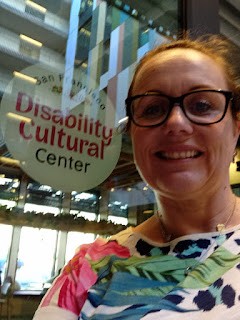
- San Francisco Disability Cultural Center – Demonstrated community based disability inclusion and accessibility practice
- San Francisco State University (SFSU) – Program in Visual Impairments – Offered insight into advanced university training programmes for VI specialists
These visits highlighted how Californian services integrate inclusive design, community support, and specialist teacher preparation.
Huntsville, Alabama
- GITWL Conference 2025 – A three day programme of workshops, keynotes, and technology demonstrations exploring literacy, assistive technology, and instructional approaches for learners with VI
- Huntsville Space and Rocket Center – Included a tour of facilities used for a specialist Space Camp designed for children and young people with VI (CYPVI)
These experiences showcased both educational innovation and enrichment opportunities for learners with VI.
Key Learning and Professional Insights
Conference sessions highlighted several evidence informed themes:
- Strategies for educators teaching learners with VI, focusing on adaptive instruction, increased independence, and tailored interventions
- Workshops on:
- Dual language development
- AI enhanced braille instruction
- Music literacy as an avenue for access
- Practical classroom based braille literacy strategies
These sessions provided a wide range of pedagogical tools directly relevant to teaching children with VI and multiple disabilities.
The conference offered demonstrations of emerging and widely used assistive tools, including:
- Typio, Typio Pro, Braillio – Tools to develop typing and digital literacy skills
- Notetakers and braille displays – Supporting access to digital content and independent learning
- Tactonom Reader Flex – Enabling tactile and auditory access to graphics for learners with VI
- Coding resources such as Finch 2.0, LEGO Spike, and Blocks4All, demonstrating accessible approaches to computational thinking
Exposure to these technologies provided practical ideas for enhancing digital access back in Wales.
International Networking and Collaboration
The trip facilitated professional networking with:
- Educators and researchers from across the United States
- Representatives from the Washington School for the Blind’s CATT Programme
- Practitioners exploring new technologies and instructional methods
These connections offer potential avenues for ongoing collaboration and knowledge exchange.
Overall Impact
The California Scholarship Trip provided rich professional development across clinical, educational, and community based VI practice. Key outcomes include:
- Greater understanding of US approaches to specialised VI education
- New instructional strategies and technologies that can be adapted for practice in Wales
- Strengthened international professional networks
- Enhanced knowledge to contribute to local service development
The insights gained from both the San Francisco and Huntsville visits provide a robust foundation for advancing innovative practices to support learners with vision impairment. In particular, the integration of AI to enhance oracy and communication skills among VI learners is becoming increasingly significant, with AI now embedded in devices such as notetakers, braille displays, and screen readers. It was striking to observe how far ahead the United States appears to be in the adoption of AI tools – including platforms such as Claude, ChatGPT, and Gemini, as well as specialist applications like Be My Eyes, Seeing AI, and Speakaboo – to describe environments and support children and young people with vision impairment. Although several of these tools are already available in the UK, there is clear potential to expand their use to further strengthen literacy, communication, and independence for CYPVI.