

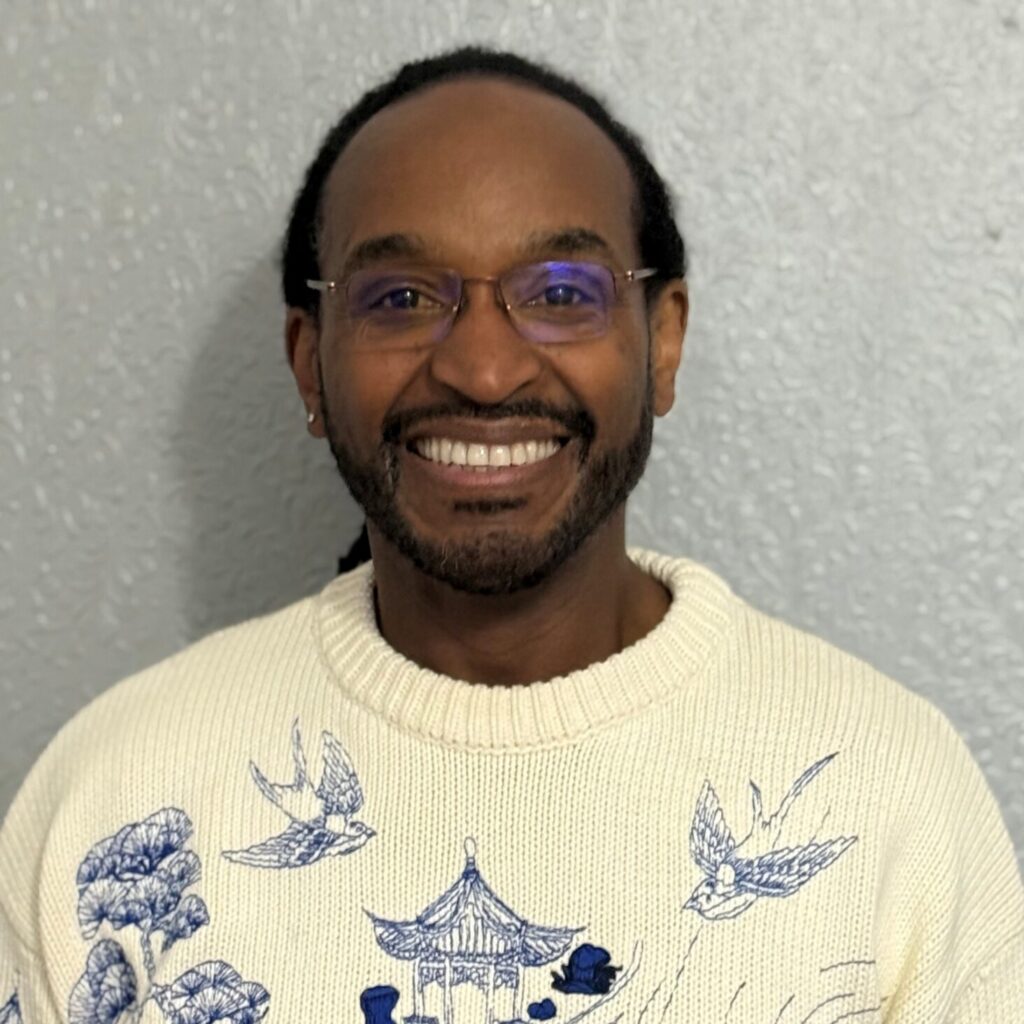
Joël Lawson, originally from Guadeloupe (French Caribbean/West Indies), tells us why he’s pleased to bring some diversity to ESU judging panels – and why he hopes others will follow suit
When did you first come across the ESU and its competitions?
‘I first discovered the ESU when my daughters were at high school and were doing the ESU’s Public Speaking Competition. As a father I love to support my daughters, so I took the time and attended several events but, as I went to more of them, I noticed that most of the judges were white men. There were few women, and very few people from ethnic minorities. I started to think what that must be like for the children, many of whom were black or Asian, to not see people like them represented on the judging panel. I also started to wonder if, by not having more diversity, there was a chance of the panel having unconscious bias.
I wrote to the ESU to share my thoughts, assuming I’d hear nothing back but, to its credit, one of their staff, Tom, called me. He went through my letter and explained that they were trying to recruit more diverse judges, admitting that there was still some way to go. To my surprise, he then asked if I would be prepared to be a judge. At first, I thought ‘no way’, the idea had never even occurred to me, but then Tom explained about the training and, after I’d had some time to think, I thought, ‘why not? Let’s try it and see.’
Which competitions have you judged?
Since I started in May 2025, I’ve judged for all three of the ESU’s competitions – Public Speaking, Schools’ Mace debating and Performing Shakespeare, where we put through the student who went on to win the overall competition. I’ve done quite a few heats around Manchester near where I live, and I’ve been to Birmingham and Wakefield as well.
What skills do you see the students getting out of the competitions?
I’ve seen from my daughters how the competitions teach them to speak in public – how to be organised in their thoughts and how to convince people, not just with their words, but with the manner in which they say something. But I think the main thing is how they build their confidence – that’s such an amazing skill to have, not just in public speaking but for every aspect of life.
What does being a judge entail?
The main thing is to make sure you’re aware of the marking criteria [all laid out in the digital handbook sent to all judges] and then to prepare yourself for giving feedback to the students, which is such an important part of the role. We like to use the ‘sandwich method’ [leading and finishing with positives and including things that can be improved upon in the middle].
What have you got out of being a judge?
So much. Listening to the debates and the speeches the students give, I’ve broadened my own knowledge no end. Also, because I’ve always judged as part of a panel, I’ve learnt how to be a better judge. Discussing and deliberating with my co-judges has been fascinating – and has also built on a whole range of other skills including negotiation, persuasion and diplomacy that I can apply to my own life outside the judging process. I’ve also met some really lovely, open, friendly people who I’ve just clicked with. Because you see them at various heats, you build a rapport and a camaraderie, which I’ve really enjoyed.
What difference do you hope you’re making to these young people’s lives?
I hope I’m being a fair judge and giving them constructive feedback that they can use to improve. But, especially for those from minority groups, I hope I’m showing them and their parents that they too can be part of this – it isn’t reserved for a particular group of people.
Do you have any message for other people considering volunteering as an ESU judge?
Do it! The more diversity and people from different backgrounds we can have, the better!